The 12 Cranial Nerves Made Easy: High-Yield Mnemonics, Functions, & Clinical Assessment
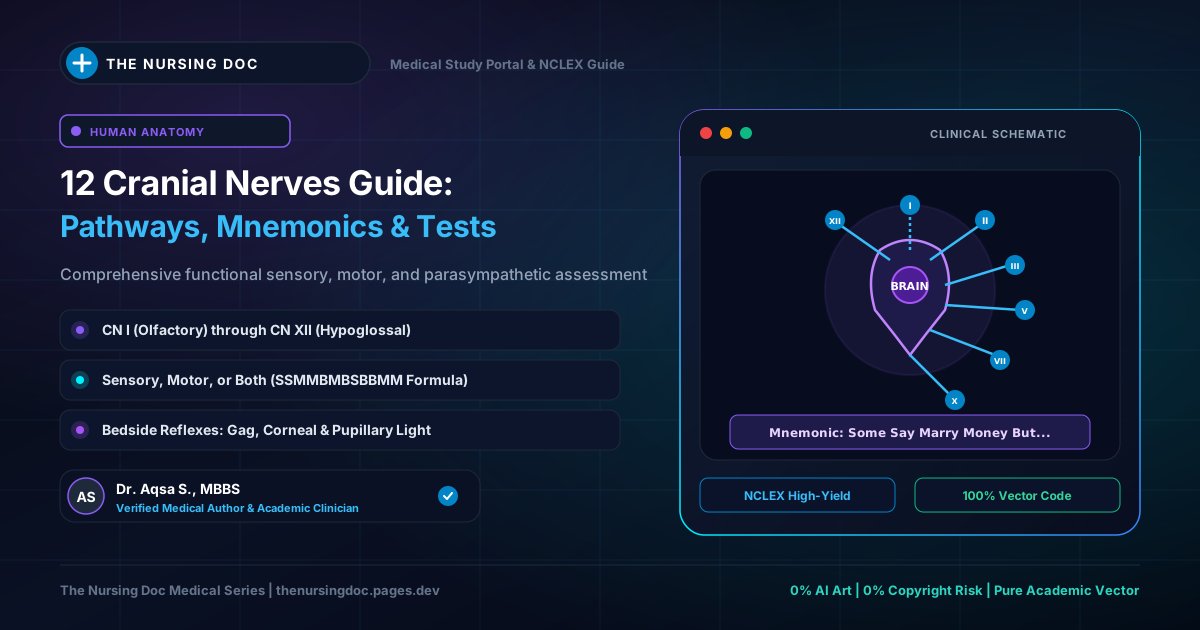
The 12 Cranial Nerves: Brainstem Topography & Modality Map
Anatomical brainstem exit zones and Sensory vs. Motor functional classification
Assessing the 12 cranial nerves (CN I through CN XII) can intimidate even experienced healthcare students. However, in bedside nursing, cranial nerve testing is your sharpest tool for detecting acute stroke, impending brain herniation, and aspiration risks.
💡 The Two Classic Medical Mnemonics:
1. To Remember the Order (I through XII):
"Oh Once One Takes The Anatomy Final, Very Good Vacations Are Heavenly"
2. To Remember Sensory (S), Motor (M), or Both (B):
"Some Say Marry Money, But My Brother Says Big Brains Matter More"
Complete 12 Cranial Nerves Reference Guide
| Nerve & Numeral | Type | Primary Function | Bedside Nursing Assessment |
|---|---|---|---|
| CN I: Olfactory | Sensory | Sense of smell | Ask patient to identify coffee or alcohol pad scent with eyes closed. |
| CN II: Optic | Sensory | Vision acuity & visual fields | Snellen eye chart, count fingers in 4 quadrants. |
| CN III: Oculomotor | Motor | Pupillary constriction, eyelid elevation, upward eye motion | Check PERRLA (Pupils Equal, Round, Reactive to Light & Accommodation). |
| CN IV: Trochlear | Motor | Downward & inward eye movement | Have patient follow finger toward nose. |
| CN V: Trigeminal | Both | Facial sensation & jaw chewing (mastication) | Light touch on forehead/cheeks with cotton ball; clench teeth. |
| CN VI: Abducens | Motor | Lateral eye movement (abduction) | Follow finger moving laterally (to the sides). |
| CN VII: Facial | Both | Facial expressions, taste (anterior 2/3 tongue) | Smile, frown, raise eyebrows, puff cheeks (test for stroke droop). |
| CN VIII: Vestibulocochlear | Sensory | Hearing & balance (equilibrium) | Whisper test, Weber & Rinne tuning fork tests, Romberg test. |
| CN IX: Glossopharyngeal | Both | Swallowing, gag reflex, taste (posterior 1/3) | Assessed together with CN X. |
| CN X: Vagus | Both | Uvula elevation, parasympathetic gut & heart control | Patient says "Ahhh" (uvula should rise midline), check gag reflex. |
| CN XI: Accessory | Motor | Trapezius & Sternocleidomastoid movement | Shrug shoulders against resistance, turn head against hand. |
| CN XII: Hypoglossal | Motor | Tongue movement | Stick out tongue (should be midline, no fasciculations or deviation). |
🚨 Life-Saving Nursing Rule: Cranial Nerves IX & X (Aspiration Prevention)
NEVER give oral medications, fluids, or solid food to a post-operative, stroke, or newly extubated patient until you have tested their gag reflex and swallowing ability (CN IX and X). An absent gag reflex leads directly to massive pulmonary aspiration and chemical pneumonitis!
Written & Medically Reviewed by Dr. Aqsa S.
Medical Doctor providing clinical neuroanatomy pearls and high-yield examination checklists for healthcare students worldwide.