The Nature of Drug Metabolism: Phase I & Phase II Biotransformation, CYP450 Dynamics, & P-Glycoprotein
An evidence-based clinical guide to hepatic xenobiotic clearance. Explore how hepatocytes convert lipid-soluble molecules into excretable polar metabolites, master the CYP450 enzyme super-family, and navigate critical drug interactions involving enzyme induction, inhibition, and P-glycoprotein transport.
Curator & Medical Director, The Nursing Doc • Peer Reviewed Clinical Notes
⚡ Quick Clinical Snapshot: The 5 Golden Rules of Biotransformation
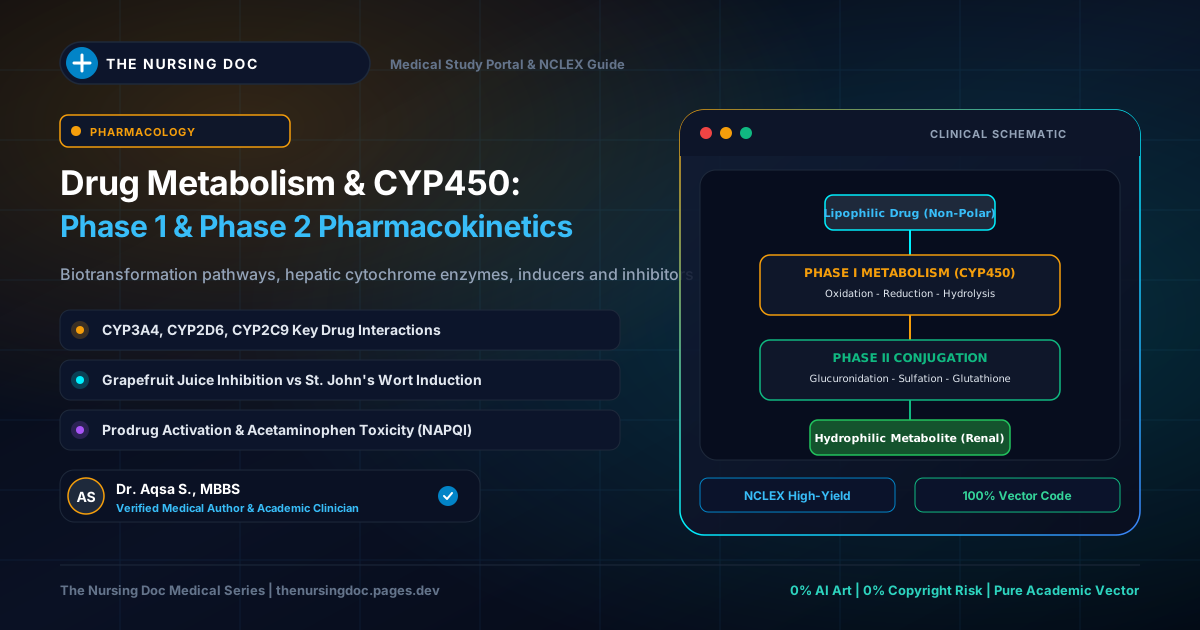
- The Lipophilicity Dilemma: Drugs must be lipid-soluble to cross biologic membranes, but lipophilic drugs filtered at the glomerulus are freely reabsorbed across renal tubules. Metabolism transforms lipophilic agents into water-soluble, ionized polar metabolites for renal and biliary excretion.
- Phase I (Functionalization): Located in hepatic smooth endoplasmic reticulum (microsomal CYP450). Introduces or unmasks functional polar groups (-OH, -NH₂, -SH) via oxidation, reduction, and hydrolysis.
- Phase II (Conjugation): Synthetic reactions attaching endogenous polar molecules (glucuronate, sulfate, acetate, glutathione) to yield inactive, highly excretable compounds.
- Enzyme Induction vs. Inhibition: Inducers (e.g., Rifampin, Phenytoin, St. John's Wort) stimulate CYP synthesis over days, causing therapeutic failure; Inhibitors (e.g., Cimetidine, Erythromycin, Grapefruit juice) block enzymes immediately, causing drug accumulation and toxicity.
- P-Glycoprotein (P-gp): Intestinal efflux pump that expels drugs (e.g., Digoxin) back into the gut lumen. Inhibiting P-gp causes dangerous systemic drug surges mimicking metabolic inhibition.
From Lipophilic Xenobiotic to Renal & Biliary Excretion
1. The Nature of Drug Metabolism & The Lipophilicity Dilemma
All living organisms are constantly exposed to foreign chemical compounds known as xenobiotics in the air, water, and food. To ensure the rapid elimination of pharmacologically active xenobiotics and effectively terminate their biological action, higher animals—including humans—require precise enzymatic mechanisms for excreting undesirable substances produced within the body (endogenous waste like bilirubin and steroid hormones) or absorbed from the external environment.
Dr. Aqsa’s Pharmacological Axiom: "Biotransformation is an essential homeostatic mechanism by which the human body terminates the action of active drugs. In specific therapeutic instances, it also serves to biotransform pharmacologically inert prodrugs into their active, therapeutic moieties."
Most pharmaceutical agents are administered as relatively lipid-soluble (lipophilic) molecules. Lipophilicity is an absolute physiological prerequisite for a drug to cross lipid bilayer cell membranes—enabling gastrointestinal absorption, distribution across the capillary endothelium, and penetration into target tissues (including crossing the blood-brain barrier).
However, this exact same lipophilic property poses a serious clearance obstacle: when filtered across the renal glomerulus into the tubular lumen, an unchanged, lipid-soluble drug readily diffuses backwards across the renal tubular epithelial cells down its concentration gradient, re-entering systemic capillary blood. Without hepatic biotransformation to polar metabolites, lipophilic agents would circulate indefinitely, causing severe accumulation and fatal systemic toxicity.
2. Types of Metabolic Reactions: Phase I Functionalization
Drug biotransformation reactions are categorized into two major classes: Phase I (Functionalization) and Phase II (Conjugation) reactions.
Phase I Reaction Architecture & The SER
Phase I enzymes are concentrated in exceptionally high densities within the smooth endoplasmic reticulum (SER) of hepatocytes. When liver tissue is homogenized in the laboratory, the SER fragments into small vesicular artifacts termed microsomes; hence, Phase I enzymes are classically referred to as microsomal enzymes.
Four Primary Phase I Pathways:
- Oxidation: Catalyzed primarily by the Cytochrome P450 monooxygenase superfamily (e.g., aromatic hydroxylation, N-dealkylation). Requires NADPH and molecular O₂.
- Reduction: Addition of electrons to azo (-N=N-) or nitro (-NO₂) functional groups (e.g., Chloramphenicol, Clonazepam).
- Hydrolysis: Cleavage of ester or amide chemical bonds by plasma and tissue esterases/amidases (e.g., Aspirin, Procaine, Lidocaine). Often non-microsomal.
- Deamination: Removal of an amino group from nitrogen-containing xenobiotics (e.g., Amphetamine via monoamine oxidase).
Substrate Specificity & Stereoisomerism:
Phase I enzymes are not highly substrate-selective. Consequently, a relatively small contingent of Cytochrome P450 isoforms (predominantly CYP3A4, CYP2D6, CYP2C9, CYP2C19, and CYP1A2) is capable of metabolizing tens of thousands of structurally distinct chemical xenobiotics.
Nevertheless, distinct stereochemical selectivity can be detected: optical enantiomers are frequently metabolized at markedly disparate rates. For example, S-warfarin is 3 to 5 times more potent than R-warfarin and is cleared almost exclusively by CYP2C9, making it highly susceptible to genetic polymorphisms and competitive drug interactions.
3. Phase II Synthetic Reactions: Conjugation & Detoxification
Phase II reactions are synthetic reactions that involve the covalent coupling (conjugation) of endogenous, highly polar subgroups to functional chemical handles—specifically —OH (hydroxyl), —NH₂ (amino), and —SH (sulfhydryl) groups—present on the parent drug molecule or introduced during Phase I.
| Conjugation Type | Endogenous Substrate | Catalyzing Enzyme | Clinical Examples & Notes |
|---|---|---|---|
| Glucuronidation | UDP-glucuronic acid | UDP-glucuronosyltransferase (UGT) | Most common Phase II reaction. Metabolizes Morphine, Acetaminophen, Bilirubin. Deficient in neonates (leads to Gray Baby Syndrome). |
| Sulfation | PAPS (3'-phosphoadenosine-5'-phosphosulfate) | Sulfotransferase (SULT) | Metabolizes Steroids, Acetaminophen (secondary pathway), Methyldopa. High affinity but saturable low capacity. |
| Acetylation | Acetyl-CoA | N-acetyltransferase (NAT1, NAT2) | Metabolizes Isoniazid, Hydralazine, Procainamide, Sulfonamides. Decreases water solubility slightly, but inactivates drug. Subject to genetic polymorphism. |
| Glutathione Conjugation | Glutathione (GSH tripeptide) | Glutathione S-transferase (GST) | Critical Detoxification: Inactivates toxic, electrophilic intermediate metabolites (e.g., NAPQI from toxic doses of Acetaminophen). |
| Methylation | S-adenosylmethionine (SAMe) | TPMT, COMT | Metabolizes Epinephrine, Norepinephrine, Dopamine, 6-Mercaptopurine. Often masks polar groups. |
⚡ Clinical Sequence Alert: Phase II Before Phase I?
While Phase I classically precedes Phase II, drugs that are metabolized by both routes may undergo Phase II metabolism before or after Phase I. For instance, the antitubercular agent Isoniazid first undergoes Phase II acetylation (via hepatic NAT2) to acetylisoniazid, which is then subsequently subjected to Phase I hydrolysis to yield isonicotinic acid!
Microsomal SER Phase I vs. Cytosolic Phase II Conjugation
4. Determinants of Biotransformation Rate & Inter-Individual Variation
The biological rate of biotransformation varies profoundly among individuals. Because hepatic clearance is often the primary determinant of a drug's overall systemic clearance and steady-state plasma concentration, individual variations in metabolic velocity must be meticulously accounted for when calculating or modifying clinical dosage regimens.
🧬 A. Genetic Factors (Pharmacogenomics)
Several drug-metabolizing systems differ among families or racial populations in genetically determined manners. Screening for single nucleotide polymorphisms (SNPs) directly impacts precision medicine:
- CYP2D6 Polymorphisms: Poor metabolizers fail to convert Codeine to Morphine (zero analgesia); ultrarapid metabolizers experience fatal respiratory depression at normal doses.
- NAT2 Acetylation Speed: Slow acetylators (50% of US/European populations) accumulate Isoniazid, causing peripheral neuropathy and drug-induced lupus; rapid acetylators risk therapeutic failure.
- TPMT Deficiency: Severe bone marrow aplasia when given standard doses of 6-mercaptopurine or azathioprine.
🚬 B. Environmental & Physiological Determinants
Non-genetic environmental factors continuously modulate baseline metabolic capacity:
- Cigarette Smoking: Polycyclic aromatic hydrocarbons induce hepatic and pulmonary CYP1A2, drastically accelerating the clearance of Theophylline and Olanzapine.
- Age Extremes: Neonates possess immature microsomal and conjugating systems (e.g., low UGT capacity); elderly patients exhibit decreased hepatic blood flow, reduced liver mass, and lower CYP activity.
- Gender Differences: Important for select drugs—e.g., first-pass gastric metabolism of ethanol via alcohol dehydrogenase is significantly greater in men than in women, leading to higher blood alcohol levels in women for identical doses.
- Hepatic Disease: Cirrhosis reduces functional hepatocyte mass and shunts portal blood, collapsing drug clearance.
5. Drug-Drug Interactions: Enzyme Induction vs. Enzyme Inhibition
Coadministration of certain therapeutic or dietary agents can profoundly alter the metabolic disposition of many co-prescribed drugs. These interactions are driven by two opposing clinical phenomena:
📈 Mechanism of Enzyme Induction: Delayed Kinetics
Enzyme induction refers to an increased rate and extent of drug biotransformation. It does not represent allosteric activation of existing enzymes; rather, inducers bind to specific cytoplasmic/nuclear receptors (such as the Pregnane X Receptor [PXR] and Constitutive Androstane Receptor [CAR]), stimulating gene transcription that results in de novo synthesis of Cytochrome P450 enzymes and the heme cofactor.
📉 Mechanism of Enzyme Inhibition: Rapid Toxicity
Enzyme inhibition occurs when a coadministered agent directly binds to the active catalytic site of the CYP450 enzyme (competitive inhibition) or irreversibly inactivates the heme iron complex (mechanism-based / suicide inhibition).
6. P-Glycoprotein (P-gp) Transport: The Gatekeeper of Bioavailability
P-glycoprotein (P-gp), encoded by the MDR1 / ABCB1 gene, is an ATP-dependent transmembrane efflux pump embedded in the apical membranes of intestinal enterocytes, hepatocytes, renal tubular cells, and the blood-brain barrier. In the intestinal mucosa, P-gp functions as a defensive gatekeeper, actively pumping absorbed xenobiotics back into the intestinal lumen before they can enter the mesenteric circulation.
⚠️ The P-gp Inhibition Toxicity Surge:
Drugs that inhibit intestinal P-gp mimic drug metabolism inhibitors by dramatically increasing bioavailability. When an inhibitor halts the efflux pump, high concentrations of orally administered drugs that would normally be expelled directly flood into the systemic circulation, culminating in toxic plasma concentrations from doses that are normally completely safe!
- Potent P-gp Inhibitors: Verapamil, Amiodarone, Quinidine, and the furanocoumarin components of Grapefruit Juice.
- Critical P-gp Substrates: Digoxin (narrow therapeutic index; coadministration with Verapamil causes lethal digitalis arrhythmias), Cyclosporine (immunosuppressant nephrotoxicity), and Saquinavir (HIV protease inhibitor).
7. High-Yield Clinical Table: Common CYP450 Inducers, Inhibitors, & Substrates
Memorizing the most common CYP450 interactions is one of the highest-yield requirements for NCLEX-RN and medical board examinations:
| CYP Isozyme | Key Substrates (Target Drugs) | Potent Inducers (↓ Drug Level) | Potent Inhibitors (↑ Drug Level / Toxicity) |
|---|---|---|---|
| CYP3A4 ~50% of all drugs |
Statins (Atorvastatin, Simvastatin), CCBs, Cyclosporine, Oral Contraceptives, Warfarin, Midazolam | Rifampin, Phenytoin, Carbamazepine, Phenobarbital, St. John's Wort | Grapefruit juice, Clarithromycin, Ketoconazole, Itraconazole, Ritonavir |
| CYP2D6 ~20% of all drugs |
Codeine (prodrug), Beta-blockers (Metoprolol), TCAs, SSRIs, Haloperidol | Rarely inducible (heavily regulated by genetics) | Fluoxetine, Paroxetine, Quinidine, Bupropion |
| CYP2C9 | S-Warfarin (narrow index), Phenytoin, Ibuprofen | Rifampin, Phenobarbital, St. John's Wort | Fluconazole, Metronidazole, Amiodarone, TMP-SMX |
| CYP1A2 | Theophylline, Clozapine, Olanzapine, Caffeine | Cigarette Smoke (PAHs), Charbroiled meat, Rifampin | Ciprofloxacin, Fluvoxamine, Cimetidine |
NCLEX & Bedside Nursing Alerts
Critical safety checks every nurse must enforce before administering medication
📝 NCLEX-RN Practice Check: Drug Metabolism
Question 1: A patient taking Warfarin (Coumadin) for atrial fibrillation is prescribed Rifampin for tuberculosis. What physiological change must the nurse anticipate regarding Warfarin therapy?
A) Warfarin clearance will decrease, leading to an elevated INR and severe bleeding risk.
✓ B) Rifampin is a potent CYP450 inducer; Warfarin metabolism will drastically increase, causing subtherapeutic anticoagulation and high thrombosis risk.
C) Rifampin directly competes for plasma albumin binding, acutely displacing Warfarin.
D) Warfarin will inhibit Rifampin elimination, leading to acute red-orange urine discoloration.
Question 2: Which biochemical reaction represents the most common Phase II hepatic conjugation pathway in humans?
A) Cytochrome P450 oxidation
✓ B) Glucuronidation catalyzed by UDP-glucuronosyltransferase (UGT)
C) Hydrolysis by nonspecific esterases
D) N-methylation via catechol-O-methyltransferase